Agentic AI GRC Systems: Enterprise Applications, Efficiency, and Implementation
Introduction
Modern enterprises operate in an environment defined by accelerating regulatory complexity, cyber threats, geopolitical instability, ESG scrutiny, operational interdependence, and continuous technological disruption. Traditional Governance, Risk, and Compliance (GRC) systems were designed primarily as documentation, workflow, and reporting tools. While these platforms improved organizational visibility and standardized compliance activities, they were fundamentally reactive systems dependent on manual oversight, static rules, and fragmented decision-making.
Agentic AI Governance, Risk, and Compliance (GRC) systems are intelligent enterprise platforms that use autonomous AI agents to monitor, analyze, coordinate, and execute risk management, compliance, audit, cybersecurity, and governance activities. The emergence of Agentic Artificial Intelligence (Agentic AI) represents a transformative shift in how organizations manage governance, risk, compliance, security, operational resilience, and strategic decision-making. Agentic AI-powered GRC systems move beyond automation into autonomous reasoning, contextual analysis, adaptive control execution, predictive risk intelligence, and multi-agent collaboration. For executives, investors, boards of directors, and business owners, Agentic AI-powered GRC systems represent the foundation of intelligent enterprise governance infrastructure capable of continuously monitoring, reasoning, learning, and acting across complex organizational ecosystems
Theoretical Overview of Agentic AI Systems
Agentic AI systems differ from traditional automation because they can reason, plan, adapt, and collaborate autonomously across enterprise environments. Rather than simply executing static workflows, agentic systems continuously evaluate enterprise data, make decisions, and coordinate operational tasks. Architecturally, agentic AI systems are typically designed as distributed, modular ecosystems composed of specialized autonomous agents, orchestration layers, memory frameworks, reasoning engines, machine learning models, knowledge graphs, and real-time data integration pipelines. These components operate together to create an intelligent decision-making infrastructure capable of perceiving enterprise conditions, interpreting contextual information, prioritizing objectives, and executing actions dynamically. At their fundamental level, agentic AI systems function as continuously operating cognitive governance networks that transform fragmented enterprise data into coordinated operational intelligence and autonomous action. In GRC environments, specialized AI agents may independently monitor controls, collect audit evidence, interpret regulations, escalate anomalies, coordinate remediation, assess emerging risks, and continuously optimize compliance and governance activities across the organization.
Core Components of Agentic AI GRC Systems
Core components of these systems include risk intelligence agents, continuous controls monitoring engines, regulatory interpretation models, enterprise workflow orchestration, audit evidence collection systems, and predictive analytics dashboards that collectively enable real-time oversight, automated compliance activities, proactive risk detection, and intelligent operational coordination. Together, these technologies improve efficiency by reducing manual processes and audit preparation efforts while enhancing effectiveness through continuous monitoring, predictive analytics, faster regulatory response, stronger internal controls, and improved enterprise decision-making.
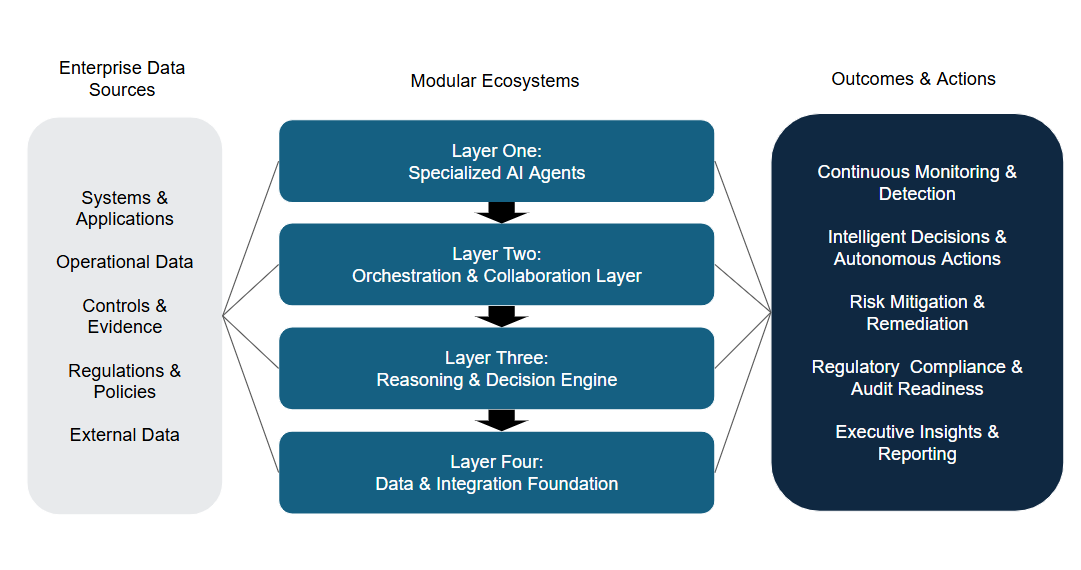
Exhibit 1: The visual is a diagram of an agentic AI system procedural interlay. Enterprise data types are sourced from internal and external mediums including internal controls and regulatory guidance. Inputs are processed in a modular ecosystem comprised of layers used to coordinate the movement of data through autonomous workflows.
Efficiency Improvements
Agentic AI GRC systems substantially reduce manual compliance testing, spreadsheet-based reconciliations, and periodic evidence collection processes. By continuously monitoring enterprise transactions, user activities, and control environments in real time, these systems eliminate many of the repetitive and labor-intensive tasks traditionally performed by compliance and audit teams. Automated evidence collection capabilities streamline audit readiness by gathering, validating, and organizing supporting documentation directly from enterprise systems without requiring extensive manual intervention. Additionally, predictive analytics and intelligent workflow orchestration improve operational efficiency by accelerating issue identification, remediation coordination, regulatory reporting, and executive risk visibility across the organization.
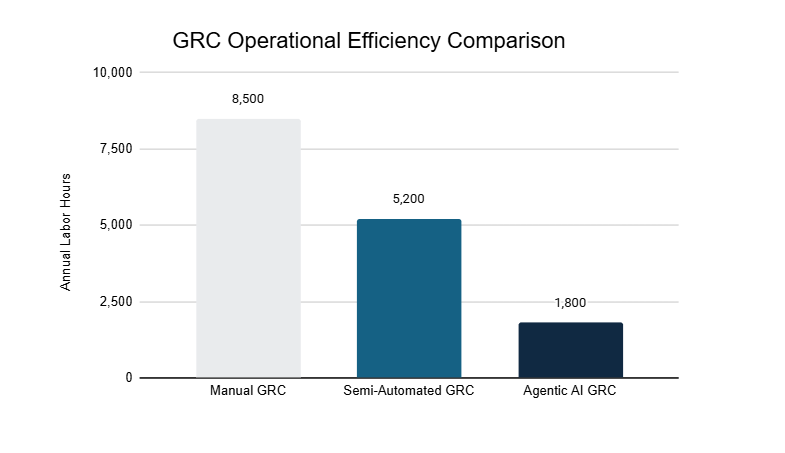
Exhibit 2: Organizations implementing agentic AI architectures may reduce annual compliance and audit support labor hours by 65% to 80% compared to traditional manual environments.
Effectiveness Improvements
Agentic AI GRC systems can rapidly identify unusual transactions, behavioral anomalies, and emerging risk patterns that may indicate fraud or operational weaknesses. Continuous controls monitoring enables organizations to detect control deficiencies immediately rather than waiting for quarterly reviews or annual audits, significantly reducing the likelihood of prolonged compliance failures. Additionally, automated audit evidence collection and real-time reporting improve audit readiness by maintaining organized, continuously updated documentation that supports faster audits, greater transparency, and more efficient regulatory examinations.
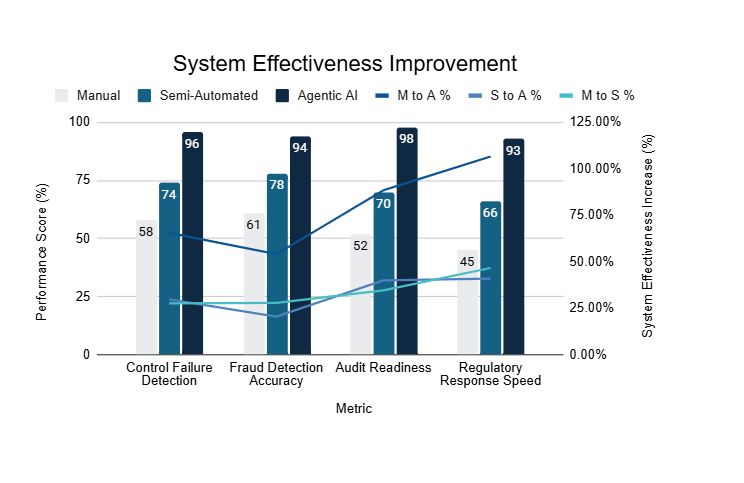
Exhibit 3: The chart above presents effectiveness improvement for GRC systems, Manual (M), Semi Automated (S), and Agentic AI (A) by performance score percentage on the primary x-axis (left) over four metrics, Control Failure Detection, Fraud Detection Accuracy, Audit Readiness, and Regulatory Response Speed. System effectiveness increase percentage is shown on the secondary x-axis (right) conveying the change in metric performance score percentage across system platforms as they scale.
Cost Optimization
Over time, agentic AI GRC systems optimize operational spending by automating repetitive compliance, audit, and risk management activities that traditionally require large teams of analysts, auditors, and compliance personnel. Continuous monitoring and intelligent workflow orchestration reduce the frequency of costly control failures, regulatory penalties, fraud losses, and operational disruptions, allowing organizations to avoid significant financial and reputational expenses. Additionally, scalable AI-driven governance infrastructures enable enterprises to manage growing regulatory complexity and expanding business operations without proportionally increasing headcount, creating substantial long-term cost efficiencies and improving overall return on investment.
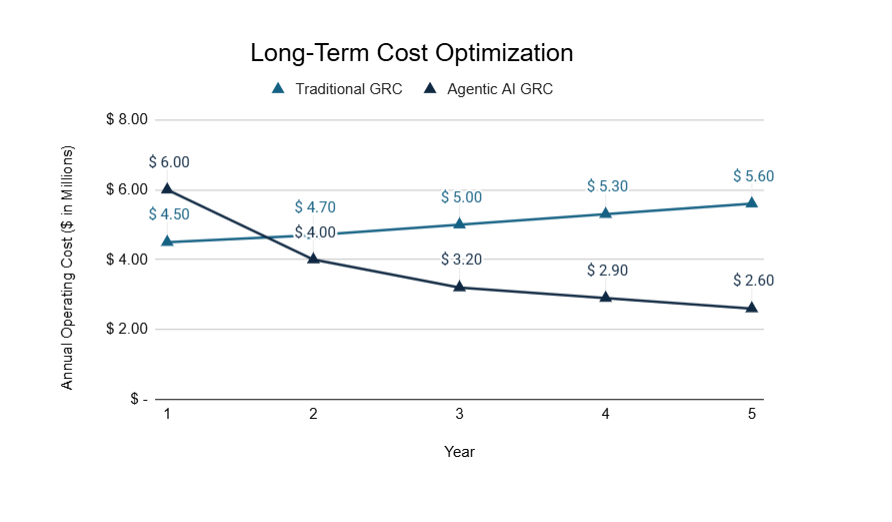
Exhibit 4: The chart above presents annual operating cost between a Traditional GRC and Agentic AI GRC system over a 5-year period. The Agentic AI GRC system experienced a 56.6% decrease in annual operating costs, while the Traditional GRC system increased 24.4% over the same period.
In-House vs Off-the-Shelf Development
Organizations may choose custom in-house development for greater flexibility and differentiation or adopt off-the-shelf platforms for faster deployment and reduced implementation complexity. In-house development allows organizations to design highly customized agentic AI GRC systems tailored to their unique operational processes, regulatory requirements, risk frameworks, and proprietary data environments, which can create strategic advantages and greater scalability over time. Alternatively, Off-the-shelf platforms, provide prebuilt compliance workflows, regulatory libraries, integrations, and vendor-supported infrastructure that enable organizations to accelerate implementation timelines and reduce development costs. The selection between these approaches often depends on factors such as organizational size, regulatory complexity, internal technical capabilities, budget constraints, long-term strategic objectives, and the desired level of customization and operational control.
How We Help Our Clients Seeking Agentic AI Platforms
Gilbert & Company Certified Public Accountants (GACCPAS) helps organizations strategically design, implement, and operationalize Agentic AI platforms aligned with enterprise Governance, Risk, and Compliance (GRC) objectives by combining expertise in accounting, audit, internal controls, regulatory compliance, enterprise risk management, and emerging AI technologies. The firm supports clients through every stage of the transformation process, including AI governance framework development, risk and controls assessments, ERP and enterprise data integration, continuous monitoring architecture, cybersecurity readiness, and both custom in-house and off-the-shelf Agentic AI platform implementation strategies. By leveraging deep experience in SOX compliance, internal controls, financial reporting, operational risk analytics, and advisory services, GACCPAS helps organizations build scalable and audit-ready AI governance ecosystems that improve efficiency, strengthen compliance, and enhance executive decision-making. Through a practical and risk-focused implementation approach, GACCPAS enables clients to modernize traditional GRC operations into intelligent, predictive, and continuously operating enterprise risk management environments.
Contact us to learn more about how our CPA services can empower your organization to excel. Together, we can help you achieve secure, compliant, and growth-oriented operations, positioning you for long term success in your industry.